Images are rich sources of information. Advertisements, propaganda, and newspaper all use images to send messages and influence people’s attitudes and behaviors. There are multiple messages communicated through a picture, Roland Barthes’ Rhetoric of the Image describes three different types of messages. Barthes’ analysis of a photograph can be demonstrated on the collage created above; the examination of an image is a tool that allows viewers to better understand how a message is communicated.
The first message Barthes describes is called the linguistic message, which includes all the words contained in the picture such as captions, labels, or words on a sign. In the image I created the linguistic message is minimal. One photo states “Mary Washington” and “UMW” on a flag logo. Another photo with a pink hair ribbon that says “I (heart) CKI,” referring to the Circle K International club at Mary Washington. Both of these verbal messages alert the viewer of the importance of the institution and my feelings towards the club. Some of the images contain text that was added to the photo for the purposes of the collage. For example the dates “2011 and 2009” signify important years for me. The year 2009 is when I left Mary Washington and 2011 is the year I returned. The label of “Friends” is written across other images which allow the viewer to understand that I consider those people to be my friends. Although the linguistic message does not provide a rich source of knowledge of the artist’s intentions it does produce some insight and clues to help the viewer begin to make sense of the image.
The second message Barthes describes is called the literal message. Simply put this is what the viewer actually sees when they look at the image. For this example the literal message is that nine photos have been assembled together to form one large image. At the top are three photos of the Mary Washington campus, next to that is a photo of the pink hair ribbon supporting CKI. Working down from there, there is picture of me and a horse, a picture of me in an empty room with the label “2011” and a lighter, almost transparent photo of myself with the label “2009.” Finally at the bottom of the collage are two photos blended together with the friends label. All of these images have been manipulated in some way, so the literal message also takes into account the black and white color and style of photographs, for instance two photos are black and white and two other photos have been “cartoonized”.
The final message Barthes discusses is the symbolic message. Unlike the previous messages that looked on the surface, the symbolic message searches for the meaning of the photographs. This message is discovered through multiple factors, such as the examination of the image’s position, colorization, and style. This particular image is a visual representation of my current life at Mary Washington, signified by the current year 2011 on the photo and the three depictions of the campus. The viewer starts at the two labeled black and white pictures in the center and works their way out, since that is perhaps the most striking pair of combined images. The 2011 picture of me alone in an empty room represents moving into the new dorm and the isolation that accompanied it. The image to the right (2009) is a black and white photo as well that has been brightened almost to a level of transparency. This style evokes a ghostly sensation, and represents a past that haunts me during this transition back to school. The fact that the images are colored once the viewer looks out from the black and white center indicates that my spirit has increased since moving in and these things have brought meaning to my life on campus. Friends have brought more joy to life at UMW, Circle K is obviously viewed with positive emotions, and the picture of me broadly smiling next to a horse reflects this happiness. Finally the clock represents a passage of time; time passing from 2009 to 2011 and also from move in day to the present. The symbolic message gives meaning to the nine images that are assembled to form a collage. This message is one of the positivity of time.
Roland Barthes’ three messages allow viewers to better understand the language of an image. With the increase in availability and ease of photo manipulation software messages are being conveyed differently. For example this image would not have been possible with out the technology that allowed images to be combined, brightened, cropped, rotated, and the colors transformed. As a result, images are being used more regularly to send messages, as well as being analyzed more thoroughly for the messages they contain.
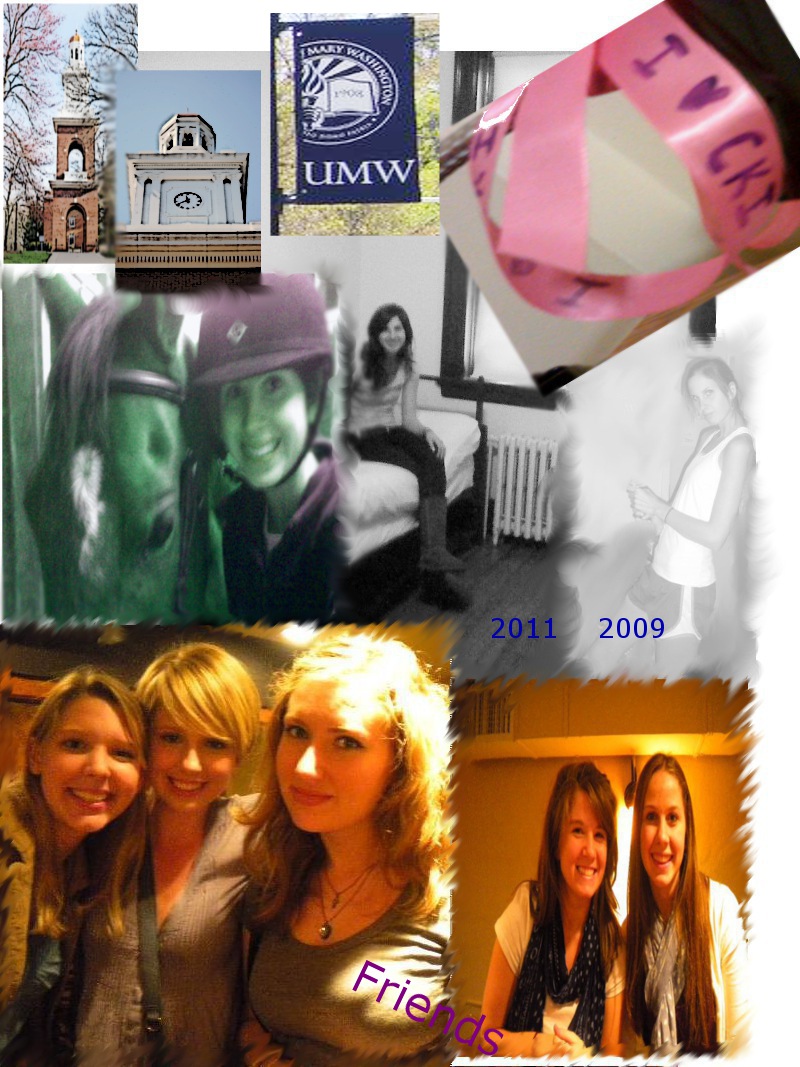
Scene at University of Mary Washington image by Flickr user rogercarr, Creative Commins Licensed
Scenes at University of Mary Washington image by Flickr user rogercarr, Creative Commons Licensed
Students Helping Honduras 2007 image by Flickr user rogercarr, Creative Commons Licensed
Two friends images from Katie Vanderpool's facebook, permission to use
The rest of the images (CKI, horse, 2011, 2009) are my own photos
This collage is a visual representation of how my feelings about being at Mary Washington have changed since coming back. The collage uses colorization of the images to represent my transformation in emotions over time. The 2011 black and white image conveys the isolation I felt when I moved in, and the 2009 one represents my past self that follows me in the present – the reason I had to leave UMW that year. Since moving back I have pushed myself to make connections and do things that make me happier, as shown by the colored pictures. The things depicted in those photos are the reasons for my new positive outlook.