Images can tell a story without using any words at all, or with just a few words for clarification. Some images are created to make a statement about a topic, others to tell a story, and others even as a representation of something else. With just one page or one small portion of a page, an image can say what originally might take up various pages of written work.
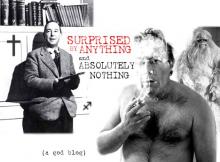
The viewer is possibly first hit with the photo of a shirtless, smoking Christopher Hitchens, and then takes in C.S. Lewis on the left and the large type in the center. Maybe he laughs, realizing that, since Hitchens is shirtless, he is not supposed to take this too seriously. The yeti is also a tip-off.
Submitted by sarahdawes on Thu, 02/10/2011 - 23:02
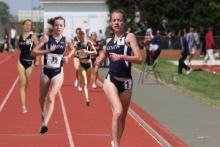
Running is always a competition you hold with yourself before it is a competition with anyone or anything else. No matter if you have teammates, coaches, or friends, and no matter who you are running for or against – it is a sport that is purely based on yourself. The image I chose to construct develops this basic idea of running into a very literal sense; it constructs the haunting of oneself in running so that audiences can view the personal struggle associated with it. In running, your personal perception is constantly effecting how you continue with the sport.
The blog Colors in South Korea contains information about South Korea to spread awareness about its cultures to people in the world that are unfamiliar with this country. A lot of people in America do not know where South Korea is located and they believe that Samsung, Kia, and Hyundai are all from Japan and China. It is not just for Americans but people in everywhere who may not know much about Korea. The purpose of this blog is to discuss the globalization of South Korea, and its goal is to spread its culture.
Submitted by hexadismal on Thu, 02/10/2011 - 23:31
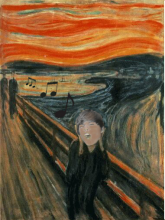
“The vibrations in the air not only affected my eye, but my ear as well because I really heard a scream, and then I painted The Scream." Edvard Munch never intended to send an ambiguous message with his reputable painting. The concatenation of this distinct onslaught of psychological sight and sound reverberate through his brushstrokes so that viewers can not only see but hear the image before them. As the template for my image, The Scream (Never Say Never), this value still holds.
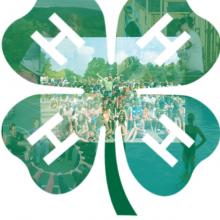
This 4-H Clover image has little to no linguistic meaning. The letter “H” appears in each of the clover’s leaves, but that means little to a person who is not familiar with 4-H. Some may see the letter as a part of the non-coded iconic image, while others may read the letters much like a brand name, as if it had a linguistic message. As a part of the non-coded iconic message, the letters contribute to the ensemble of the 4-H Clover. Without the letters, one may just associate the overall form with a nondescript clover.
Submitted by ModernSelkie on Thu, 02/10/2011 - 23:55
Images are rarely simple. Life is complex, and so too are the things which reflect life. Often there are images within images, layers stacked on top of each other, which provide more than one fixed meaning. In the image discussed here, there are literally multiple images within the image. This often provides depth, but also means that the image is difficult to deconstruct. Moreover, as Roland Barthes discusses in his piece Rhetoric of the Image, there are multiple levels to an image; an image does not simply tell one story. It tells several, on multiple levels.
Submitted by b4ssm4st3r on Fri, 02/11/2011 - 00:00
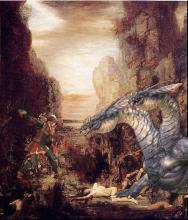
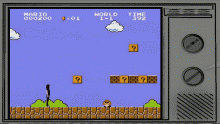
This image combines several themes which have always fascinated me, and which have defined my life. The first theme, probably the most apparent, is that of myths and fantasies. Growing up, I was always obsessed with the stories about dragons and heroes with magic swords. The second theme is that of the video game. I have always been drawn towards video games because of their storyline, and it just so happens that many popular games draw inspiration from older mythological stories.
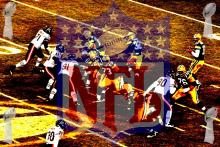
Unlike Barthes’ image where he states it is signifying an exact replica of reality, the image I created failed to do so. My image, however, has been combined with other images and altered allowing it to be symbolic and have many different insightful meanings. Combining images of the Green Bay Packers, the National Football League logo, and the Vince Lombardi trophy I have created this one image for interpretation. The rhetoric of the image contains three main symbols: linguistic, literal, and symbolic.
Submitted by shannotate on Fri, 02/11/2011 - 01:04
We view images everyday through media such as television and the internet. Society does not usually stop to think about how their subconscious is perceiving these images, and they simply go about their day without giving it a second thought. However, it is important not to become too familiar with the world around us, therefore it is crucial to look at these images in another light. My image can be analyzed (like all other images) using the same these levels that Roland Barthes uses in his essay titled Rhetoric of Image.